
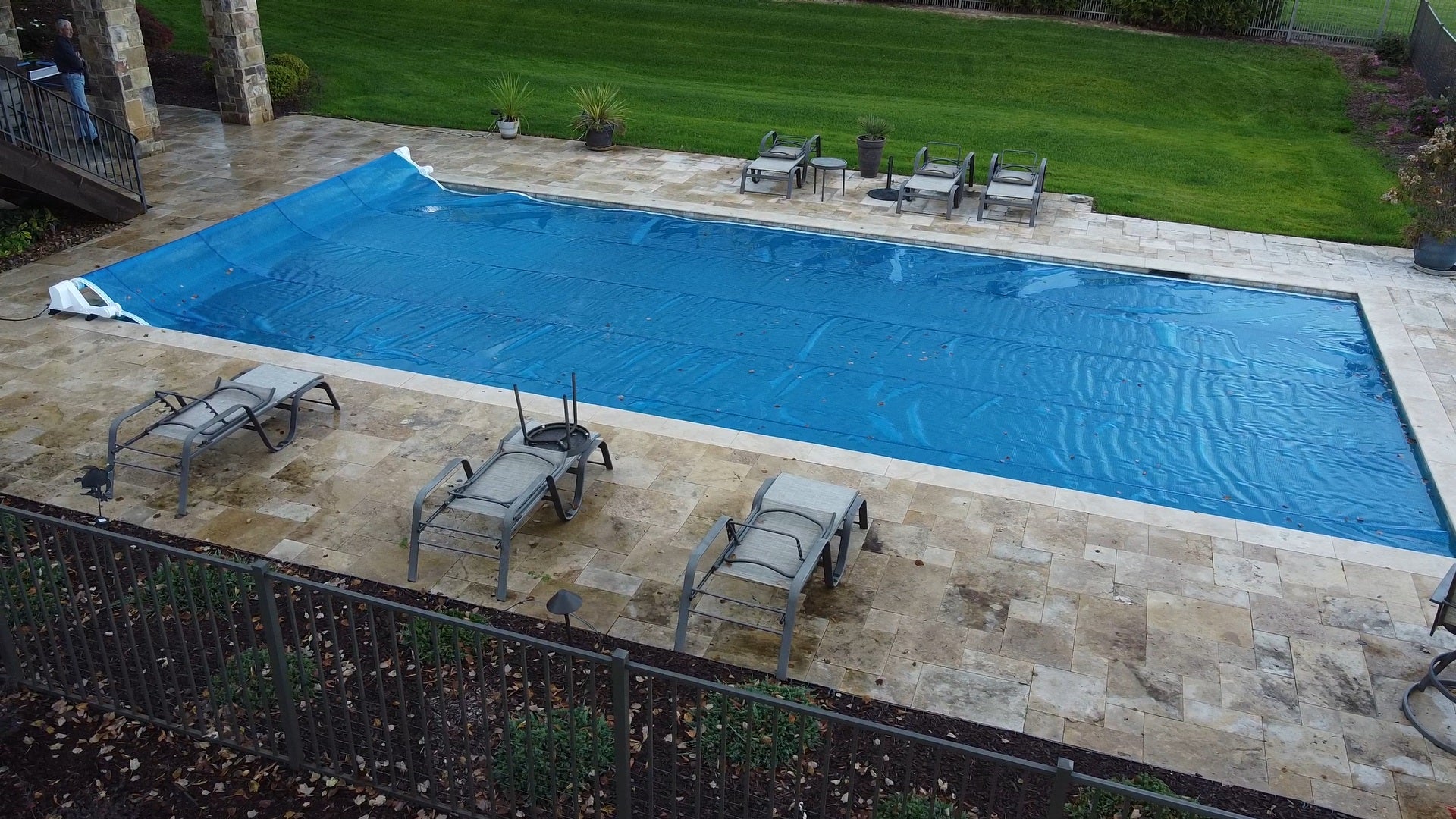
Automatic vs Manual Pool Covers
Which is right for you? The definitive comparison for South African pool owners
If you're choosing between an automatic and a manual pool cover, the real question isn't which is "better" — both are excellent at the job they're designed for. The right choice comes down to four things: how often you use your pool, how strict your safety requirements are, how much you can spend upfront, and whether you value convenience over budget.
The Verdict by Use Case
Young families with small children
Hydraulic automatic (PoolLock) — highest safety rating, fastest deployment.
Holiday homes / seasonal use
Manual safety cover — lower upfront cost, no electrical maintenance.
Daily-use pools (6+ months/year)
PoolDeck slatted automatic — fastest ROI through energy savings.
Retirees / accessibility-focused
Hydraulic automatic — one-button operation, no manual labour.
Commercial / hospitality
Hydraulic automatic — meets liability standards, fast turnaround between guests.
How Automatic Pool Covers Work
An automatic pool cover deploys via a motorised system — either an electric motor (slatted PoolDeck) or a hydraulic direct-drive (PoolLock). Operation is one-button or one-key. The cover travels along recessed tracks built into the pool coping, sealing the surface in under 60 seconds.
Slatted automatics use floating polycarbonate or PVC slats that roll up into a recessed wet pit, an above-ground bench, or a Martini Bench Seat. Hydraulic vinyl systems use a continuous fabric that retracts onto a roller — supporting up to 250 kg/m² when fully deployed.
How Manual Pool Covers Work
A manual safety cover is a tensioned PVC fabric (typically 600–700 gsm) supported by aluminium battens. It is secured using stainless-steel ratchets that anchor into the pool deck. Removal and replacement is a 5–10 minute job, manageable by one fit adult.
Manual covers are SABS SANS 10134:2016 compliant when correctly installed. They support up to 150 kg, meaning a child or pet that wanders onto the cover remains safely on top.
Side-by-Side Comparison
| Feature | Manual Cover | Automatic Cover |
|---|---|---|
| Upfront Cost | Contact for quote | Contact for quote |
| Deployment Time | 5–10 minutes | Under 60 seconds |
| Safety Rating | 150 kg/m² | Up to 250 kg/m² |
| Lifespan | 10–12 years | 10–15 years (with service) |
| Electrical Needed | None | Dedicated circuit + RCD |
| Annual Maintenance | Rinse + inspect | Professional service recommended |
| Retrofit Friendly | Yes (always) | Yes (top-track / above-ground bench) |
ROI Calculation — 8×4 m Pool Worked Example
Scenario: 8×4 m pool, average Highveld climate, family of 4, daily summer use.
Annual savings with any cover: Significant reductions in water, chemical, and heating costs — contact us for a personalised savings estimate.
Manual Cover
Lower upfront cost, fast payback
Quick ROI
Automatic Slatted Cover
Premium investment, superior convenience
Long-term ROI
Verdict: Manual covers pay back faster in pure financial terms. Automatic covers are bought for convenience and safety, with energy savings as the bonus.
Pros and Cons
Manual Cover
Automatic Cover
Frequently Asked Questions
Can I upgrade from manual to automatic later?
Yes — Designer Pool Covers’ manual systems are designed as a “stepping stone”. The manual mechanism can be replaced with a hydraulic motor and power pack at a later stage.
Are automatic covers safe during loadshedding?
Yes if you have a manual override key or backup battery. PoolLock hydraulic systems can be operated manually in a power outage.
Which lasts longer?
Both reach 10–15 years with proper care. Automatic systems last longer when serviced annually; manuals last longer if rinsed and stored correctly each winter.
Is one safer than the other?
Both meet SABS SANS 10134:2016 when correctly installed. Hydraulic automatic (250 kg/m²) has the highest absolute load rating, but a properly tensioned manual cover is fully compliant for child and pet safety.
Conclusion
There is no universally "best" pool cover. The right choice depends on your pool, your family, your budget and your priorities. We recommend booking a free on-site assessment with Designer Pool Covers — our NSPI-accredited installers will spec the exact cover that matches your situation, with no obligation.
Willem de Wet
Founder & Managing Director, Designer Pool Covers
Willem founded Designer Pool Covers in 2012 and has personally overseen 4,500+ installations across South Africa. NSPI accredited and SABS SANS 10134:2016 certified.
View all articles by WillemBook a Free On-Site Assessment
Our NSPI-accredited installers will spec the exact cover for your pool, budget and priorities — no obligation.