
Solar Pool Covers vs Heat Pumps
Which saves more money in South Africa? Real-world ROI comparison
With Eskom tariffs rising 12–18% per year and loadshedding still a feature of South African life, pool heating economics have changed permanently. Heat pumps were the default pool-heating technology for the past decade, but solar pool covers have quietly become the better-ROI choice for most South African homes.
Comparison at a Glance
| Factor | Solar Cover | Heat Pump |
|---|---|---|
| Upfront cost (8×4 m) | Contact for quote | Contact for quote |
| Annual running cost | Minimal | Electricity dependent |
| Heat gain achievable | 6–10 °C | 10–15 °C |
| Loadshedding immunity | Yes ✔ | No ✘ |
| Payback period | ~12 months | ~5–7 years |
| Best for | Most pool owners | Year-round swimmers |
How Solar Pool Covers Heat Your Pool
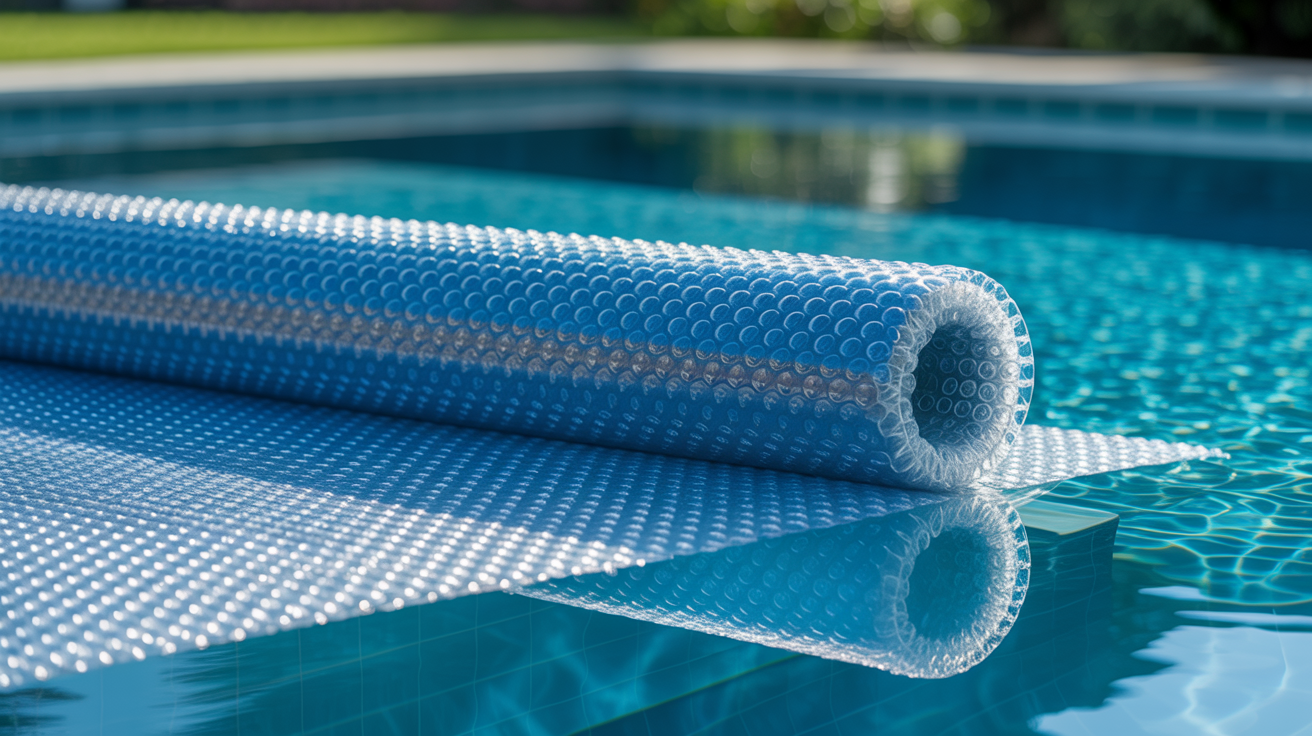
A solar pool cover (also called a thermal blanket) is a UV-stabilised polyethylene sheet with air-filled bubbles that float on the pool surface. Energy transfer is two-way: it traps solar heat absorbed by the water during the day, and it dramatically reduces heat loss through evaporation overnight.
GeoBubble Variants from Designer Pool Covers
- Sol+Guard (Light Blue, 500-micron) — up to 10 °C heat gain. Most popular.
- Standard (Dark Blue, 400-micron) — up to 8 °C heat gain.
- EnergyGuard (Grey/Black, 500-micron) — up to 7 °C with algae inhibition.
How Heat Pumps Heat Your Pool
A pool heat pump extracts ambient heat from the air and transfers it to the pool water using a refrigeration cycle. It typically delivers 4–6 units of heat per unit of electricity consumed (COP 4–6) when operating in optimal conditions. Performance drops significantly below 10 °C ambient temperature.
ROI Calculation — 8×4 m Pool, Highveld
Solar Cover Only
Affordable upfront. Significant savings on water + heating.
Fast payback
Heat Pump Only
Higher upfront cost. Ongoing electricity required.
Longer payback period
Combined
Cover cuts pump runtime 60–70%, maximising savings.
Best long-term value
Climate Zone Recommendations
Loadshedding — The Hidden Game-Changer
Heat pumps require continuous power. During Stage 4–6 loadshedding, a heat pump may only run 60–70% of the time, dropping pool temperature 2–3 °C overnight.
Solar pool covers operate independently of the grid — they keep working through any loadshedding stage. This single factor has shifted SA pool-heating economics decisively in the cover's favour.
Frequently Asked Questions
Can I use both a solar cover and a heat pump?
Yes — and you should, if year-round swimming is the goal. The cover reduces heat pump runtime by 60–70%, dramatically improving payback.
Do solar covers work in winter?
Partially. They reduce heat loss but cannot generate heat without sun. For winter swimming you need a heat pump in addition.
Which thermal blanket is best for South Africa?
Sol+Guard (Light Blue, 500-micron) is the most popular for general use. EnergyGuard is preferred for pools with persistent algae issues.
How long do solar covers last?
4–6 years with proper care. Avoid leaving them in direct sun off the pool.
Conclusion
For 90% of South African pool owners, the right answer in 2026 is: solar cover first, heat pump only if you genuinely swim year-round. The cover's payback is sub-12-month; the heat pump's is 5+ years. Designer Pool Covers offers GeoBubble thermal blankets nationwide with delivery to your door.
Willem de Wet
Founder & Managing Director, Designer Pool Covers
Willem founded Designer Pool Covers in 2012 and has personally overseen 4,500+ installations across South Africa. NSPI accredited and SABS SANS 10134:2016 certified.
View all articles by WillemGet a GeoBubble Thermal Blanket Quote
Nationwide delivery. Sub-12-month payback. Zero running costs.